


Parents, school administrators, school board members, and teachers were excited when the Bliss School District received a grant from the Blue Cross of Idaho Foundation for Health to help the rural district launch an early education program for the 2025-26 school year.

“Securing the Early Education Grant to launch our rural preschool has been an absolute game-changer, and we are overflowing with gratitude for this incredible opportunity,” Bliss Superintendent of Schools Matt Valadao said.
But no one was happier about the new early education program than kindergarten teacher Angela Overturf.
For the past 12 years, Overturf has been responsible for educating students who enter her kindergarten classroom with no prior exposure to early learning or childcare environments. As a result, she’s devoted substantial time to teaching the most fundamental skills, such as holding a pencil, sitting appropriately in a chair, standing in line, and following basic routines, before she could begin addressing the academic needs.
“We’ve had some kids who have never been outside their house,” Overturf said. “They don’t know their colors, they’ve never opened a book. They can’t count to 10. It truly takes four months to teach them basic skills – the first letter of their name, getting their pencil muscles ready. These are skills kids should have coming in.”
The new early education program should help change that. The full-day program operates four days per week – the same as the K-12 buildings — and focuses on the skills that are appropriate for four- and five-year-olds.
“We color, read books, craft,” said Alejandra Franco, the early education program teacher. “We teach them one letter of the alphabet a week. We try to make it fun for them.”
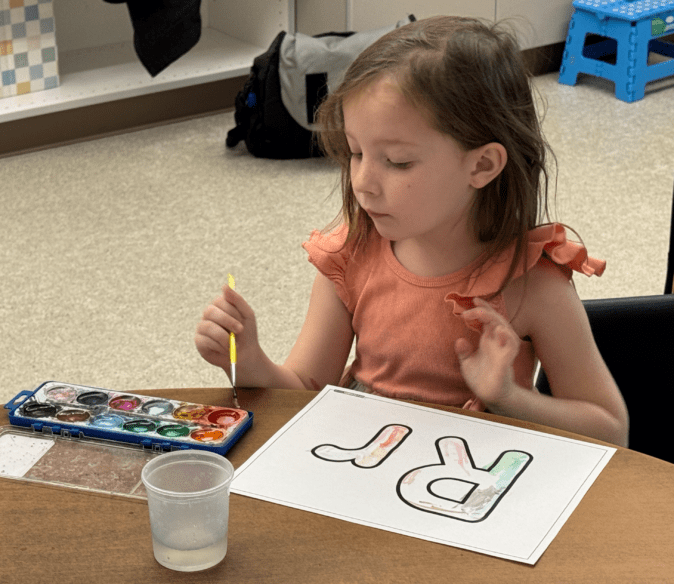
The program is an introduction to school, and making the experience fun can set the children up for future success and give them a positive impression about attending school.
“This program provides our families with a vital sanctuary where four-year-olds thrive through quality instruction, nutritious meals, and joyful play in a safe, nurturing environment,” Valadao said. “Our youngest learners are already buzzing with excitement, diving headfirst into a world of books and art that builds the essential foundation they need to enter kindergarten with confidence.”
THE IMPORTANCE OF EARLY EDUCATION
Early education is important because it helps provide a base for lifelong learning, behavior, and health. The early years (birth to age 5) are when brains develop rapidly, and quality early education programs can help promote cognitive, emotional, and social growth. There is no other time in a person’s life when the brain develops as rapidly as those first five years.
These programs not only help cognitive, emotional, and social growth, they help prepare children for kindergarten. Data shows that children who attend quality early education programs are more likely to graduate high school, attend college or trade school, and achieve higher earnings.
The Blue Cross of Idaho Foundation for Health understands the connection between education and health. The early education programs and grants were established after we listened to school administrators and teachers, who told us of their importance.
“I talked with many school district leaders across Idaho and lack of kindergarten readiness for students was a consistent theme, especially for rural school districts,” Blue Cross of Idaho Foundation for Health Senior Program Officer Jackie Yarbrough said. “We developed the Early Education and Schools learning series to help school districts learn best practices in early education, then supported 23 districts with grant funding to start or expand their early education programming. All children across Idaho deserve the opportunity to participate in quality early education programs, and we identified how we could positively impact many rural communities through this funding and expertise.”
Bliss was one of the districts that attended the learning series in 2025 because the district knew community members wanted a program.

“On our community needs assessment and district survey, having a preschool and childcare consistently rose to the top of the responses,” said Tyler Jessup, the curriculum director for the district. “We’ve asked these questions in a number of different ways, and those always come up. This program definitely meets a need in the community.”
Bliss School is a Title 1 school, meaning it receives federal funding to support students from low-income families. More than 75 percent of the 120 students in the Bliss School District (preschool through Grade 12) are eligible for free or reduced-price lunch, and the school population is nearly 50 percent Hispanic or Latino. The top industry in the Bliss area is agriculture. The goal of the federal Title 1 program is to improve academic achievement of disadvantaged students. The funding can be used for additional staff, materials, and other educational needs.
MAKING THE GRADE
Only 50 percent of the 14 students in the kindergarten class scored proficient on the 2025 fall Idaho Reading Indicator (IRI), a standardized test given to kindergarten to third-grade students. The IRI helps teachers and school administrators identify students who need additional reading support, guided instruction, and monitor student progress. The Idaho State Department of Education uses IRI results to distribute literacy intervention funding to schools and districts. Families receive their child’s IRI results to stay informed about reading development and may help create individualized reading plans if needed.

Statewide data shows that 63 percent of Idaho kindergarteners were proficient on the IRI. The data shows Bliss is well below the state average. District personnel hope the early education program will help close or end that gap.
“Some of Alejandra’s students are already where my kindergarteners are right now, and that’s exciting,” Overturf said.
“We are already bursting with pride thinking about the head start these students will have,” Valadao said. “We are profoundly grateful for how this program has come to life, and we cannot wait to see this talented group excel as they head into kindergarten next year.”
Franco said her early education program isn’t focused on preparing for the IRI or any test.

“I’m just trying to make it fun for them and teach things that will help them – how to use a glue stick, grip a pencil, use scissors – fun stuff,” Franco said. “It’s their first time being away from their Mom … This first class has been amazing.”
Kindergarten readiness means a child has developed the skills, behaviors, and confidence that help them thrive when they start school. It does not mean a child must master academic tasks such as reading or math before starting school. Kindergarten readiness is a balance of social, emotional, physical, and early learning skills.
The effects of the program will go beyond kindergarten readiness.
“This grant is a strategic win for our educators,” Valadao said. “By closing the readiness gap early, we are empowering our teachers to focus on grade-level excellence rather than constant intervention.
PARENTS LOVE THE PROGRAM
Stephanie Cortez has seen the benefits of the program. Her daughter, Lily, is one of seven students in the early education program.
“It’s really helped my daughter a lot to be here with other kids and socializing,” she said. “She’s getting to know someone besides me — the teacher.”
Cortez also has a son, Nico, who is in the kindergarten class. She wishes her son had the opportunity to attend the early education program.

“A few of the problems that Nico’s had in kindergarten, Lilly is not going to have them,” Cortez said. “Having the preschool does help the kids a lot. We did some ABCs and things like that at home, but here it’s just more structured.”
Leslea Brown also is a parent of a preschool student. Her son, Aero, loves attending school.
“I enjoy him coming home and telling me all the things he’s learned,” she said. “He knows so many letters now that if I spell things out he knows some of the words. My husband and I are very thankful that Bliss has this opportunity for kids.”
Before the early education program launched in August/September 2025, parents had no options in Bliss to enroll their children in a program. Some parents drove their kids 12 miles away to a program in Gooding, while some parents stayed home and did the best they could.
“I am not a very good teacher, so having this program means that my son can go learn, interact with children, and build life skills he wouldn’t be able to at home or at his grandma’s house,” Brown said.
Brown and Cortez love the smaller classrooms that the district offers, allowing more one-on-one teaching for students who may need a little extra help learning.
“Having this pre-K program helps get them set up for the long 13 years of education,” Brown said. “And hopefully five more after that.”
“We cannot wait to see the lifelong impact this program will have on our students and community,” Valadao said.